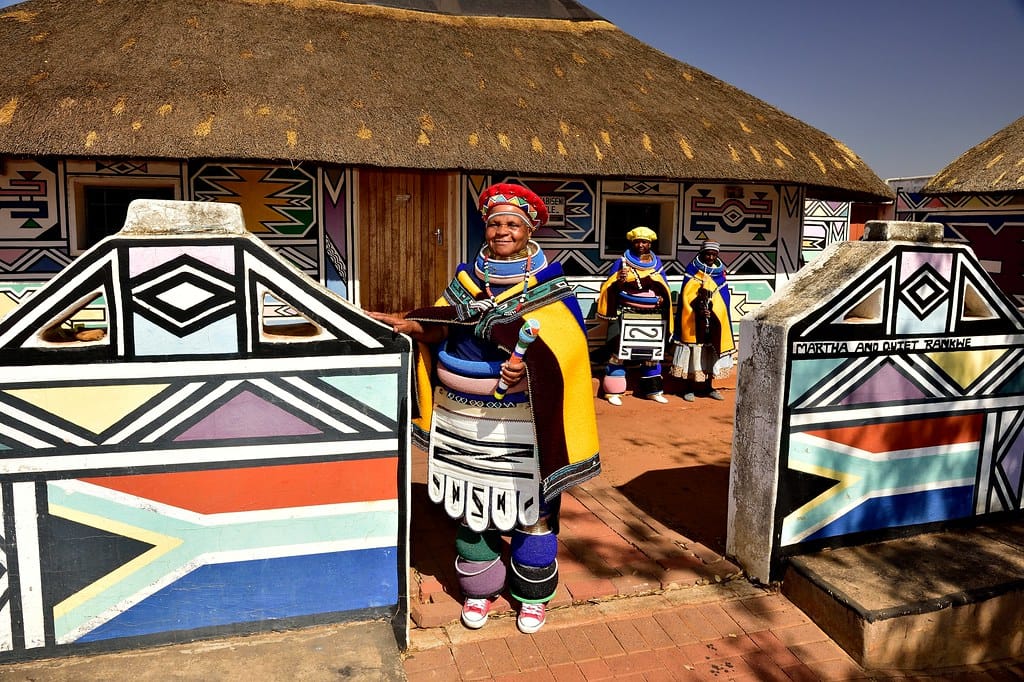
Few visual traditions are as instantly recognisable as Ndebele wall painting: crisp black outlines, blocks of saturated colour and geometric forms that seem to vibrate. In the villages of Mpumalanga and the old Transvaal, it has long been a practice led by women, passed from mother to daughter and renewed with each season.
A visible identity
Scholars often connect the flowering of the style to the hardships the Ndebele faced in the nineteenth and twentieth centuries, when communities were displaced and land was lost. Painting the home became a way of asserting presence and continuity — a declaration, visible from the road, of who lived here. Early works used earth pigments and natural materials; later artists embraced commercial paints and an ever-brighter palette.
From village walls to the world
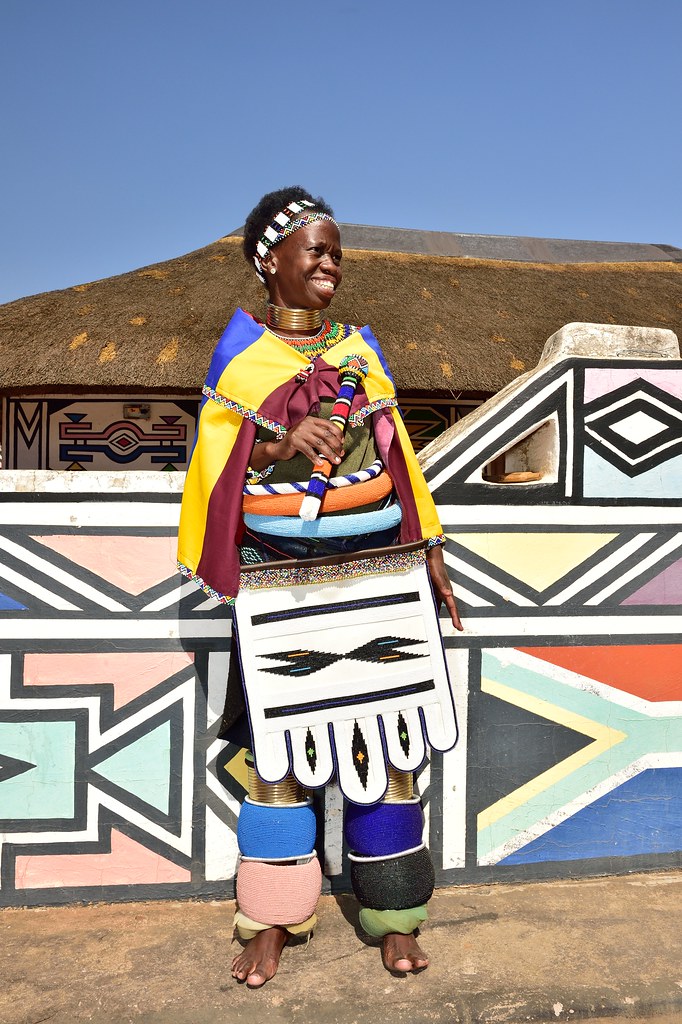
The tradition’s most famous ambassador is Esther Mahlangu, whose career took Ndebele design from homestead walls to international galleries — most famously when she painted a BMW Art Car in 1991. Her work showed that a so-called folk tradition could hold its own in any contemporary space.
Pattern here is not decoration. It is a language with its own grammar.
Today, Ndebele motifs appear on sneakers, album covers and hotel lobbies. The challenge, as always, is to borrow with credit — and to remember that behind every pattern is a community that made it mean something first.