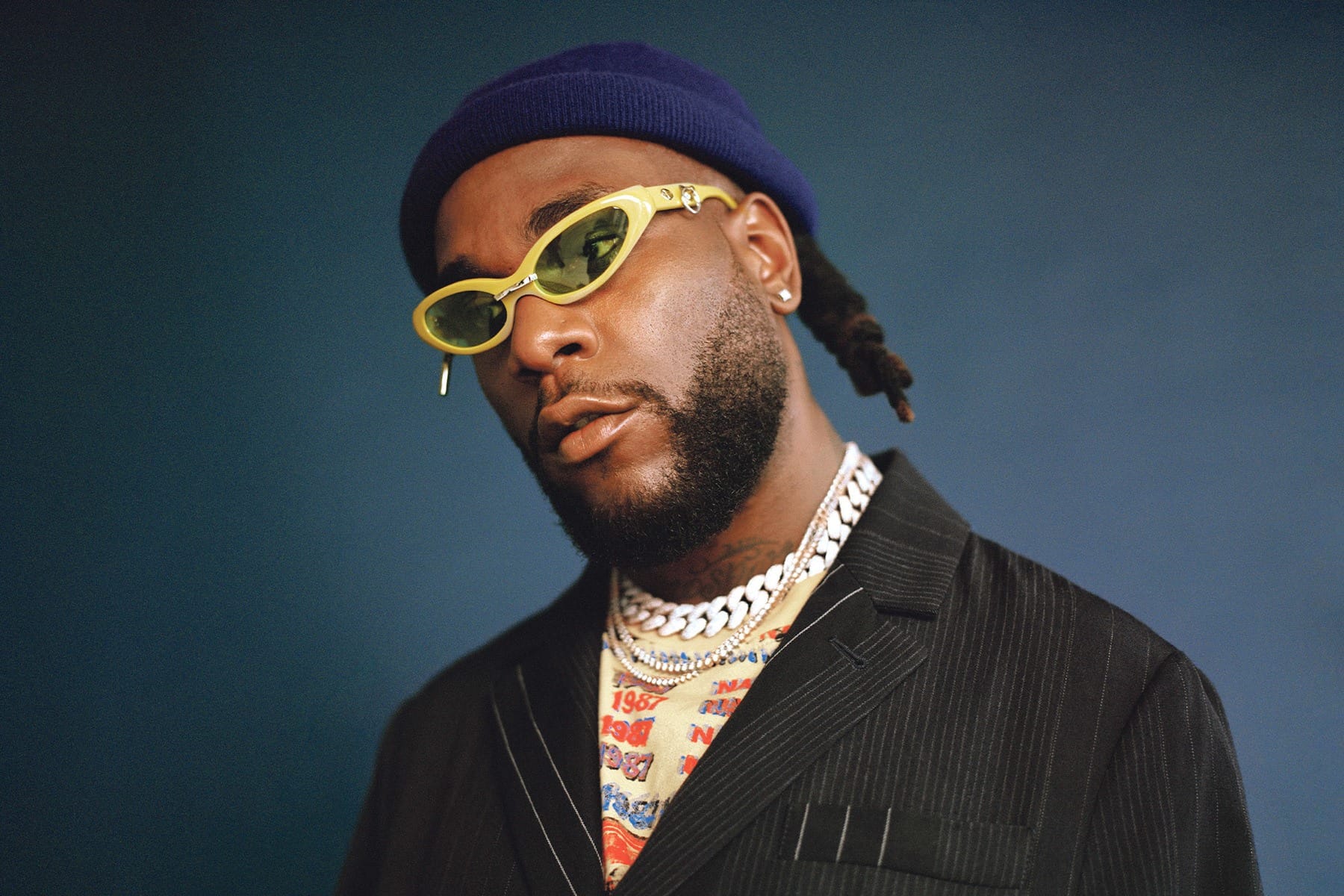

In keeping with the ceremonial atmosphere, there were even speeches honouring his chieftaincy. One was made by his mother, Bose Ongulu, as she unexpectedly presented him with his MTV EMA award mid-performance, and the other when he was handed a commemorative plaque for being the first Nigerian artist to sell out Wembley Arena. Weeks after the show, as the decade drew to a close, he racked up another impressive accolade: a much-coveted Grammy nomination.
“That’s something I’ve basically spoken into existence,” Burna Boy, real name Damini Ebunoluwa Ogulu, says reflecting on the moment he knew he was in the running for Best World Music Album. In this case he actually sang it into existence, in the title track of African Giant: “Can’t nobody do it better‚ check am and see/ I know say one day e go better‚ I go carry grammy.” Perhaps that’s why during the aforementioned frenzy of affection and awards at his concert his expression was full of joy, tinged with a little humility – but certainly not shock. He’s exactly where he told himself he’d be.
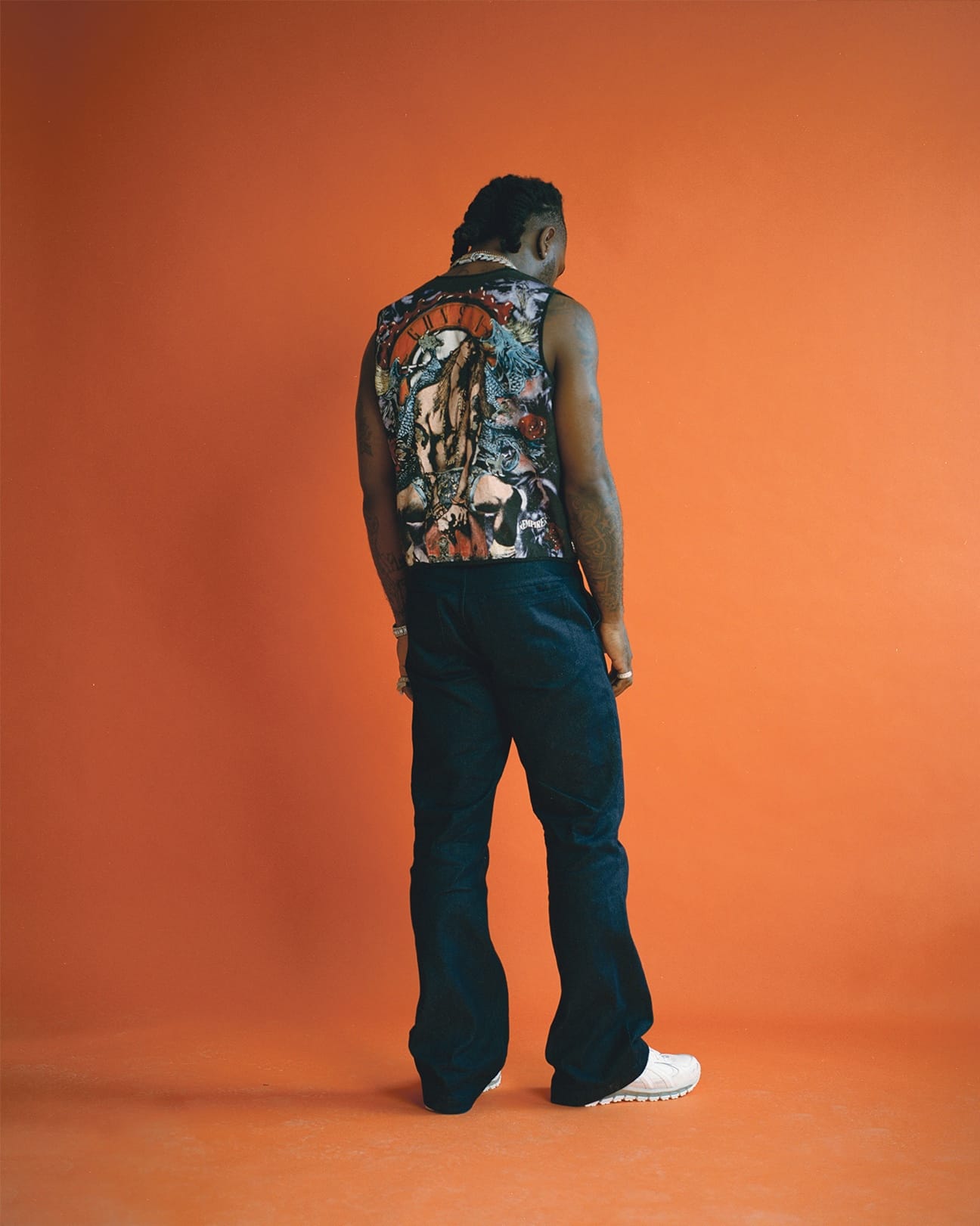
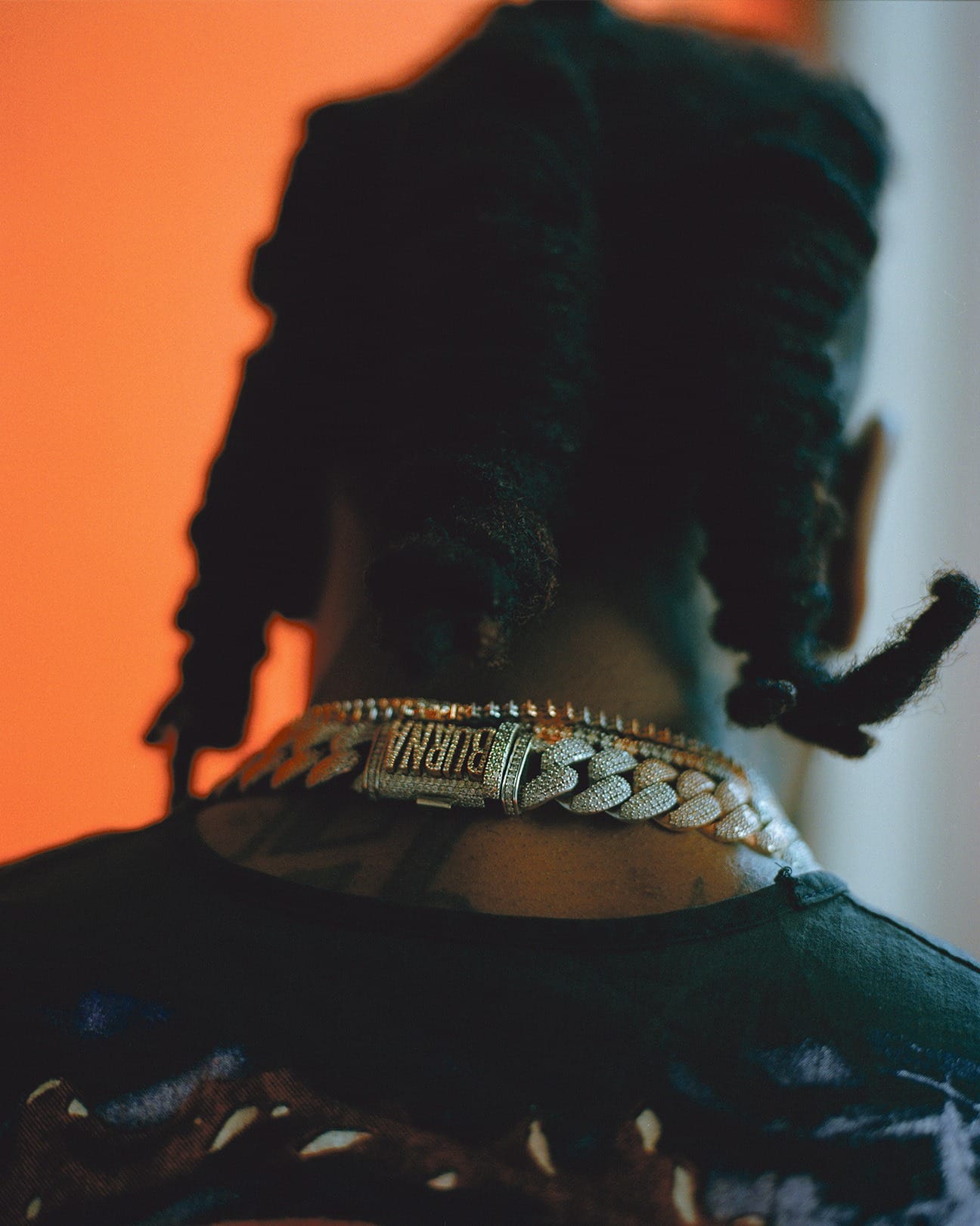
It’s a question he asks a few times throughout our conversation. Mostly because he makes a lot of analytical statements – his own little Burna-isms that span how he looks at life, his identity, and the diaspora at large. Even over the phone, I can tell he’s exhausted, speaking in a low voice after performing back-to-back shows during December, Nigeria’s busiest party season. Despite this, the 28-year-old musician seems to possess the wisdom and conviction of someone much older. Perhaps you could attribute this to the years of hard graft that preceded his success, a success that an international audience might mistake as sudden when it was anything but. “Performing has always been a part of me,” Burna Boy says, revealing that he used to dance on restaurant tables during Sunday lunch with his family. “But I wasn’t really professional until 2010.”
Born in the seaport city of Port Harcourt, the majority of Burna Boy’s childhood was spent in Lagos State before moving to London to complete his studies. A resident until the age of 20, he calls London his “second home” despite having his visa rejected when he tried to re-enter years later; something that was only restored as late as 2016. “London taught me to be realistic,” he laughs. “It taught me patience.” Throughout his youth, it was his tight-knit family that laid the foundations for the artist he was to become. “I was exposed to a lot of different sounds in my childhood,” he recalls. His mum, a lecturer, would listen to French music, Ivorian music group Magic System and Anita Baker.
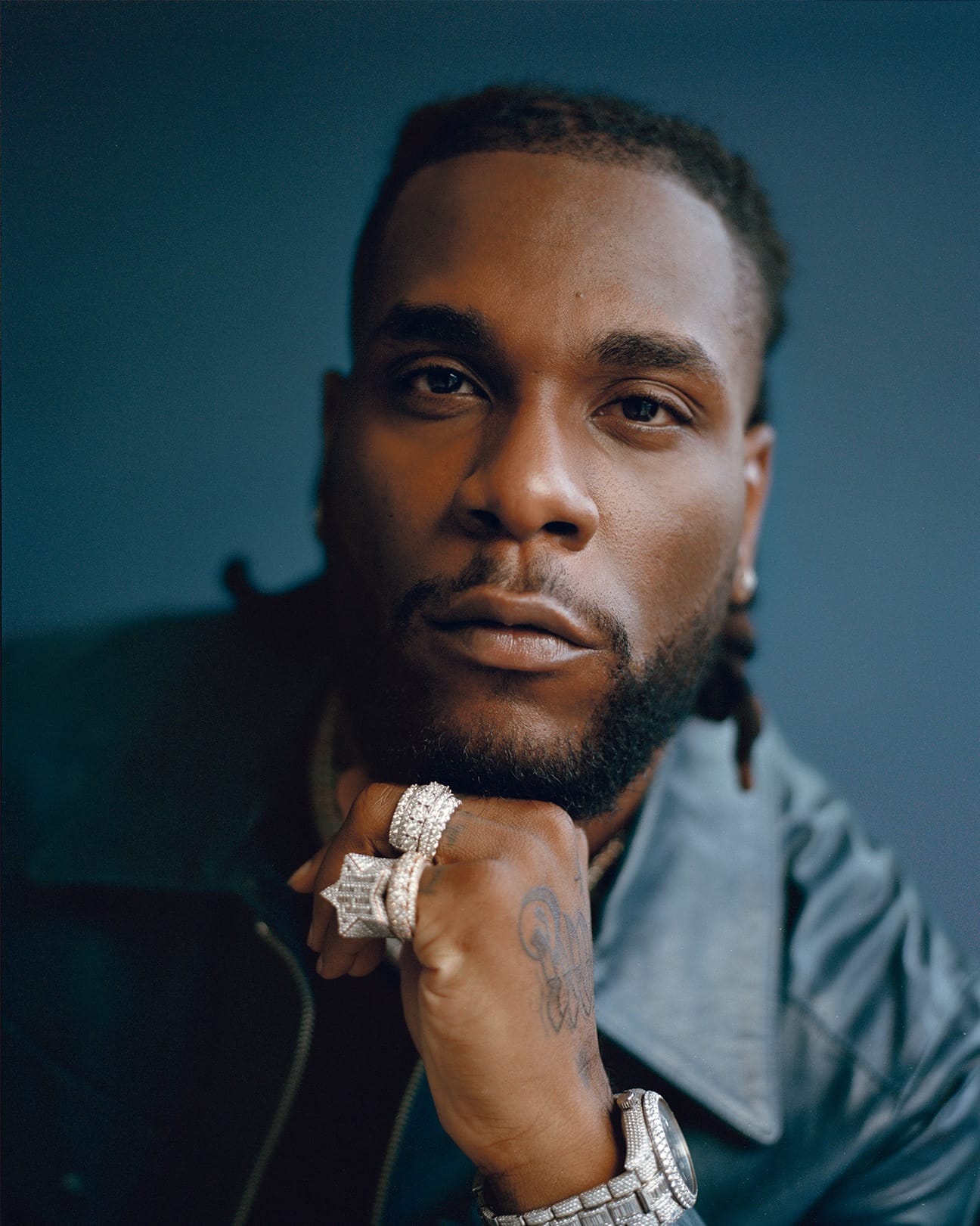
His father, who ran a welding business, was into reggae. His uncle would listen to Naughty by Nature and “rap stuff”. “My grandad was Fela [Kuti]’s manager,” he adds. The Afrobeat pioneer is one of the most influential Nigerian musicians in history, an artist who used his music to take aim at the country’s corrupt elite and spread messages of African unity, socialism and resistance. “He was all about African pride,” he concludes, clearly relishing the familial connection to an icon.
It’s not hard to see how these experiences have moulded Ogulu into Burna Boy. His 2013 studio debut L.I.F.E., released on Lagos label Aristokrat, was heavily influenced by pan-African sounds and marked him out as one to watch in Nigeria. Subsequent releases have continued to build on his distinctive musical identity, a blend of Nigerian music, dancehall, rap and R&B, sung in English, Pidgin, Igbo and Yoruba. Indeed, while almost all of the music coming out of Nigeria is erroneously dubbed Afrobeats by outsiders – whether that be Tiwa Savage’s R&B-tinged sound, the sunny melodies of Afropop, or the slightly more underground alté scene – Burna coined his own term for his output: Afrofusion. It’s a term that embodies and honours Burna Boy’s rich mix of musical influences.
As an interest in African music began to spread beyond the continent’s borders, Burna Boy’s clear vision caught the attention of the right people. He jumped on tracks for UK and US artists as diverse as Fall Out Boy – a band he says he listened to as a teen – to J Hus, Jorja Smith and Future. Own It, a collaboration with Stormzy and Ed Sheeran released at the tail end of last year, went on to become the UK’s first No. 1 of 2020. He even got the Beyoncé seal of approval when she tapped him for a song on The Lion King: The Gift, which she curated and executively produced. Still, the most potent expression of Ogulu on his own terms is, of course, African Giant, his colossal fourth studio album and Grammy-nominated global breakthrough. Released in July 2019, it shot to Top 20 in the UK charts and was ranked as one of Billboard’s Top 50 albums of the year. The album bounces between club-ready bangers with infectious beats like Killin Dem and Gbona, and love songs for your Netflix and chill playlist like Gum Body and cheaters’ anthem Secret. He also demonstrates his own curatorial ability by cherry-picking collaborators from across the globe, inviting the likes of Jeremih, Damian Marley and fast-rising Nigerian rapper Zlatan to the project.
Most importantly, African Giant is an album with a marked sense of purpose. The record has moments of evoking his musical hero – and his granddad’s old friend – Fela Kuti, most notably through Afrobeat rhythms and narratives of inner city struggle on Wetin Man Go Do. Elsewhere, Dangote details his hunger to work towards success in the same way as Nigeria’s richest man Aliko Dangote. He even uses the music video – over 10 million YouTube views and counting – to disseminate a stat about Nigeria’s 23.1 percent unemployment rate, stating that it should be “a priority for any government” to empower the workforce. The outro on Spiritual includes a sample of the acceptance speech his mother gave at the BET Awards when he won Best International Act. “And the message from Burna, I believe,” Mama Burner said, addressing the crowd in LA. “Would be that every person should please remember that you were Africans before you were anything else.”
